Introduction
Since the 19th century (1838) the Central Commission for the Navigation of the Rhine (CCNR) has drawn up specific rules for the transport of dangerous goods on the Rhine (canon powder, explosives, poisonous and corrosive substances, etc.). Over the decades, these regulations have evolved in order to continue to guarantee a high level of safety for navigation and its environment. In 1971, the ADNR Regulations governing the transport of dangerous goods on the Rhine were introduced. In 2009, the CCNR decided to replace the ADNR on the Rhine with the ADN Regulations. The ADN Regulations are annexed to the European Agreement concerning the International Carriage of Dangerous Goods by Inland Waterways (ADN Agreement).
Nowadays the CCNR works closely with the UNECE (United Nations Economic Commission for Europe) and OTIF (Intergovernmental Organisation for International Carriage by Rail) to ensure harmonised rules for the transport of dangerous goods within Europe across all modes of transport (ADR for road and RID for rail). This cooperation is essential for the safe and efficient management of the carriage of dangerous goods across the whole European transport network.
Agreement on dangerous goods (ADN)
From ADNR to AND
The ADNR entered into force in 1971, replacing a number of previous regulations:
- the Regulations for the transport on the Rhine of flammable substances not belonging to the category of explosives, adopted in 1893, last amended in 1969;
- the Regulations concerning the carriage on the Rhine of corrosive and poisonous substances, adopted in 1899, last amended in 1970;
- the International Regulations for the Carriage of Combustible Liquids by Inland Waterways (known as the Hague Regulations), adopted in 1939, last amended in 1970.
Over time, the ADNR was restructured and updated (1995, 2003, 2008) to ensure closer harmonisation with the ADR and RID regulations. This also allowed the introduction of major changes (Resolution 2008-I-25

 ), such as:
- the introduction of new criteria for rating the hazard posed by substances in terms of water pollution and health;
- the gradual transition of the fleet from single to double hulled vessels.
Instigated primarily by the CCNR, the European Agreement concerning the International Carriage of Dangerous Goods by Inland Waterways, or ADN Agreement, was signed on 26 May 2000 in Geneva. It entered into force on 29 February 2008.
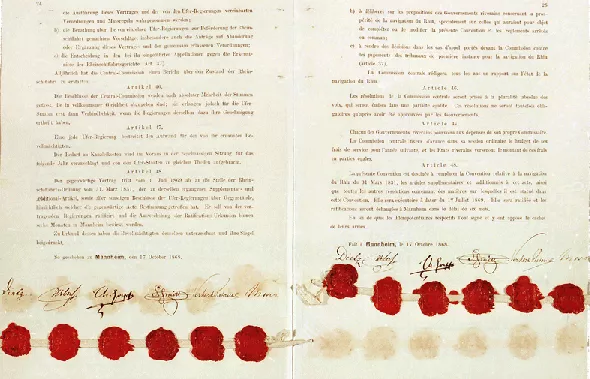
The regulations annexed to this agreement (ADN Regulations) were largely based on the content of the ADNR. The ADN Regulations entered into force on 28 February 2009, replacing the ADNR with effect from 1 January 2011. The resolution adopted by the CCNR to this end, based on the exercise of its powers under the Mannheim Convention , provides for a range of adoption mechanisms (Resolution 2009-II-20).
In parallel to these developments, the European Community adopted a Directive on the inland transport of dangerous goods (Directive 2008/68/EC of the European Parliament and of the Council of 24 September 2008). With this directive, the ADN Regulations apply to river transport within Member States or between Member States since 2011.
The ADN Regulations which have been applicable since 1 January 2011 are updated every two years.
The ADN Agreement is available in German on the CCNR website.
The ADN Agreement is available in French, English and Russian on the website of the UNECE: https://unece.org/about-adn.
Content of the ADN Regulations
Part 1: General provisions
Part 2: Classification
Part 3: Dangerous goods list, special provisions and exemptions related to limited and excepted quantities
Part 4: Provisions concerning the use of packagings, tanks and bulk cargo transport units
Part 5: Consignment procedures
Part 6: Requirements for the construction and testing of packagings, intermediate bulk containers (IBCS), large packagings, tanks and bulk containers
Part 7: Requirements concerning loading, carriage, unloading and handling of cargo
Part 8: Provisions for vessel crews, equipment, operation and documentation
Part 9: Rules for construction
Role of the CCNR and cooperation with the UNECE in relation to the ADN Agreement
The CCNR cooperates with the UNECE in relation to the European Agreement concerning the International Carriage of Dangerous Goods by Inland Waterways of 26 May 2000 (ADN Agreement).
The CCNR Secretariat fulfils the German secretariat tasks at the meetings of the ADN Safety and Administrative Committees (and their associated bodies). The UNECE Secretariat provides the Secretariat for the other three working languages (French, English and Russian). This requires regular and good coordination between the Secretariats, including between the meeting sessions, especially with regard to the preparation of meeting documents.
On the basis of the French version of the regulations annexed to the ADN, which is published every two years by the UNECE, the CCNR Secretariat prepares an official German translation in consultation with the German-speaking contracting parties to the ADN Agreement and publishes it on the CCNR website.
Among other tasks, the CCNR Secretariat supports the informal ADN working group on the training of experts in drawing up the catalogue of questions for examining the experts, in accordance with Chapter 8.2 of the ADN. Every two years, the ‘General’, ‘Chemical’ and ‘Gases’ catalogues of questions are adapted in accordance with the development of the regulations annexed to the ADN. The German version is published on the CCNR website.
Last but not least, another important task of the Secretariat is to ensure harmonisation of the regulations annexed to the ADN with the general regulations and rules of the CCNR. To this end, the CCNR Secretariat forwards information on changes to the regulations to the ADN Safety Committee and makes suggestions for possible amendments to the regulations annexed to the ADN.
The Committee
Within the CCNR, the transport of dangerous goods by water falls under the remit of the Committee for Dangerous Goods (MD).
Its main tasks are:
- ensuring consistency with other CCNR regulations and formulating suggestiosn for amendments to the ADN Regulation;
- monitoring developments in inland navigation (automation, digitisation, new energy sources for propulsion, etc.) with particular attention to their impact on the transport of dangerous goods;
- cooperating on the entry into force and updating of the ADN Agreement (UNECE WP.15 / AC.2) and adapting to harmonise with other regulations;
- analysing accidents involving the transport of dangerous goods and making use of the findings;
- examining specific fleet safety issues (degassing doubled hulled vessels, etc.);
- improving the ship/shore interface for loading/unloading dangerous goods. In particular, monitoring the work on updating the ISGINTT/GBG (Global Barge Guide) and attending meetings as an observer where required.
The MD Committee traditionally meets in Strasbourg (see the meeting calendar).
Chair of the Committee: Ms Barbla ETTER, Commissioner for Switzerland
Secretariat: Ms Friederike STOCK, Administrator responsible for infrastructure, environment and dangerous goods
ISGINTT safety guide
The purpose of the ISGINTT safety guide is to increase the safety of the transport of dangerous goods at the interface of inland tank barges with other vessels or shore facilities (terminals). The intention is not to replace or to amend current legal requirements, but to provide additional recommendations. The ISGINTT safety guide is the result of best practices as recommended by the participating industry associations. It is compatible with international maritime guidance for sea-going vessels (such as, International Safety Guide for Oil Tankers and Terminals (ISGOTT), Liquefied Gas Handling Principles on Ships and in Terminals).
The project was initiated in January 2006 by the CCNR and OCIMF (Oil Companies International Marine Forum) and has involved all industry associations concerned with the transport of dangerous goods on European inland waterways. In 2007 SIGTTO (Society of International Gas Tanker and Terminal Operators) joined the project.
The first edition of the safety guide was published in 2010. Working with the CCNR Secretariat and the OCMIF, the ISGINTT Committee later produced a second edition of the guide. It was published in July 2026. Since 2024, the OCMIF has taken over this task from the ISGINTT Committee. The OCMIF intends to turn the ISGINTT into a ‘Global Barge Guide (GBG). If required, the CCNR will attend the Global Working Group meetings as an observer.
The ISGINTT safety guide is available on the ISGINTT website www.isgintt.org.
Documentation
European Agreement concerning the International Carriage of Dangerous Goods by Inland Waterways (ADN) [2025]
Abrogation of the ADNR - Introduction of ADN on the Rhine