Missions of the CCNR
In order to guarantee the prosperity of navigation on the Rhine, the Central Commission for the Navigation of the Rhine (CCNR) has always had a keen interest in its economic aspects. The CCNR constitutes an important forum for the discussion of the economic issues of concern to the sector. Monitoring economic activity and coordinating the economic actions of its Member States are thus essential and long-standing tasks for the CCNR.
In the Mannheim Declaration


 of 2018, the Member States of the CCNR strive to strengthen the role of inland navigation as an economically relevant mode of transport with strong potential for development and innovation.
The CCNR is thus requested:
- to accelerate the integration of inland navigation into digital and multimodal logistic chains,
- to work towards better coordination between national development programmes and provide transparent information about them,
- in conjunction with the Member States, to ensure faster and more efficient inland vessel cargo handling in seaports.
Economic activities of the CCNR
Over the course of history, the role of the CCNR has varied. For example, during the 19th century it worked to reduce, and later abolish, the octroi, tolls and other duties levied on navigation on the Rhine. This abolition was enshrined in the Mannheim Act of 17 October 1868 (Article 3). At the end of the 19th century and during the first half of the 20th century, the CCNR also brought its influence to bear on changes to customs duties.
During the 1950s and the 1960s, it served as a vehicle for holding economic conferences: the aim was to seek solutions to the difficulties faced by the sector at that time. The CCNR also played an important role in maintaining contractual freedom for freight on the Rhine, at a time when the trend was towards national price controls.
From the outset, the CCNR published statistical reports. These publications included quantitative information on the number of vessels in the Rhine fleet and the amounts transported on the Rhine, as well as on the activities of the major Rhine ports.
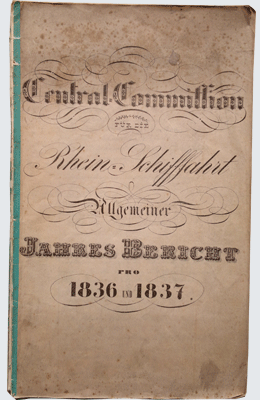
Statistical data from the activity report of the CCNR, 1836
Since 2005, the CCNR has carried out its market observation activities in partnership with the European Commission. The Central Commission also works in partnership with the other river commissions (Danube, Moselle, Sava), the inland navigation sector, Eurostat and the national statistics offices, the ports and the national waterways administrations. The work is managed by the Secretariat of the Central Commission. This successful cooperation has allowed the CCNR to expand this activity, which it has been carrying out for almost two centuries, beyond the Rhine to cover the entire European inland waterways network.
This is essentially an ever-evolving process, with new aspects constantly being added to take account of needs and possibilities. The CCNR market observation reports allow the situation on the European inland navigation market, together with its changes and structural development, to be monitored, on an annual or half-yearly basis, or according to area of interest. They also constitute an important basis for decision-making, at various levels, for the benefit of European waterway transport.
Over the centuries, and in today's free market environment, the CCNR's economic role has become less direct. The CCNR has established an Economic Committee (ECO) to deal with the whole range of economic issues.
The Committee
The mission of the Economic Committee (ECO) is to follow trends on the transport market in general and the inland navigation market in particular. To this end, it maintains close relations with the sector. It is interesting to note that most of the delegations to the CCNR have appointed Commissioners from among the ranks of the inland navigation profession.
Besides inventories and economic analyses of the market, the ECO Committee's remit includes:
- contributing to promotional policy for waterborne transport,
- evaluating general policy measures that may affect waterborne transport and its market,
- creating a platform for exchanging and coordinating positions (for example, by organising exchanges with the sector and all stakeholders).
Every two years, the ECO Committee defines a work programme setting out the priorities and future tasks.
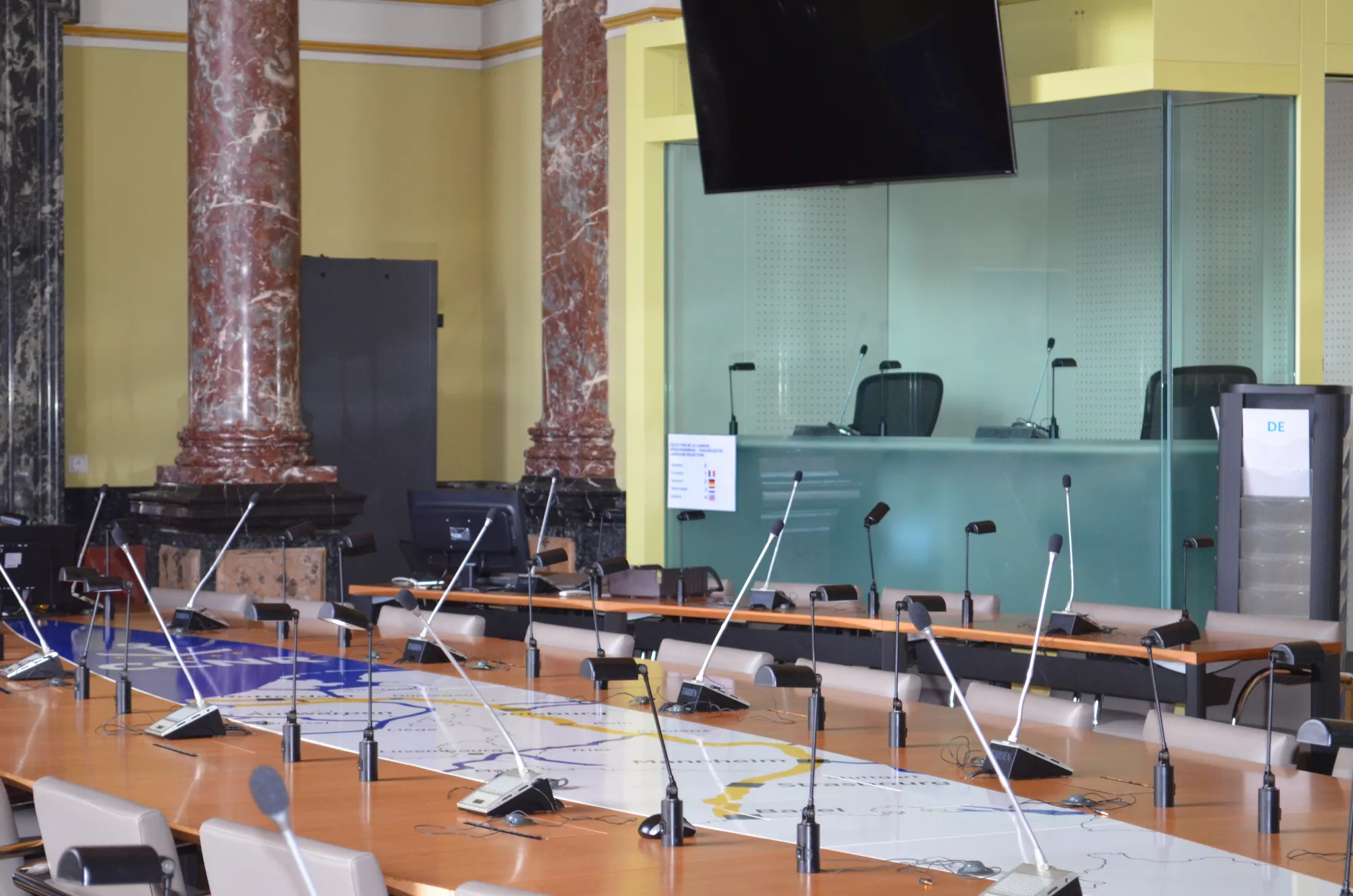
The Committee traditionally meets 3 or 4 times a year, in Strasbourg (see the meeting calendar). Joint meetings with different committees, such as the ECO Committee, are also organised. These meeting allow overarching issues, such as the energy transition and the impact of low water periods to be addressed.
To facilitate exchanges with all economic players, the ECO Committee regularly organises forums, round tables and themed meetings on areas of economic importance, such as low water levels, financing the energy transition, etc. Documents relating to these meetings are available on the CCNR website.
Chair of the Committee: Ms Nicole VAN DER SMAN, Deputy Commissioner for the Netherlands
Secretariat: Ms Laure ROUX, Administrator responsible for economic affairs