The unity of the legal regime on the Rhine
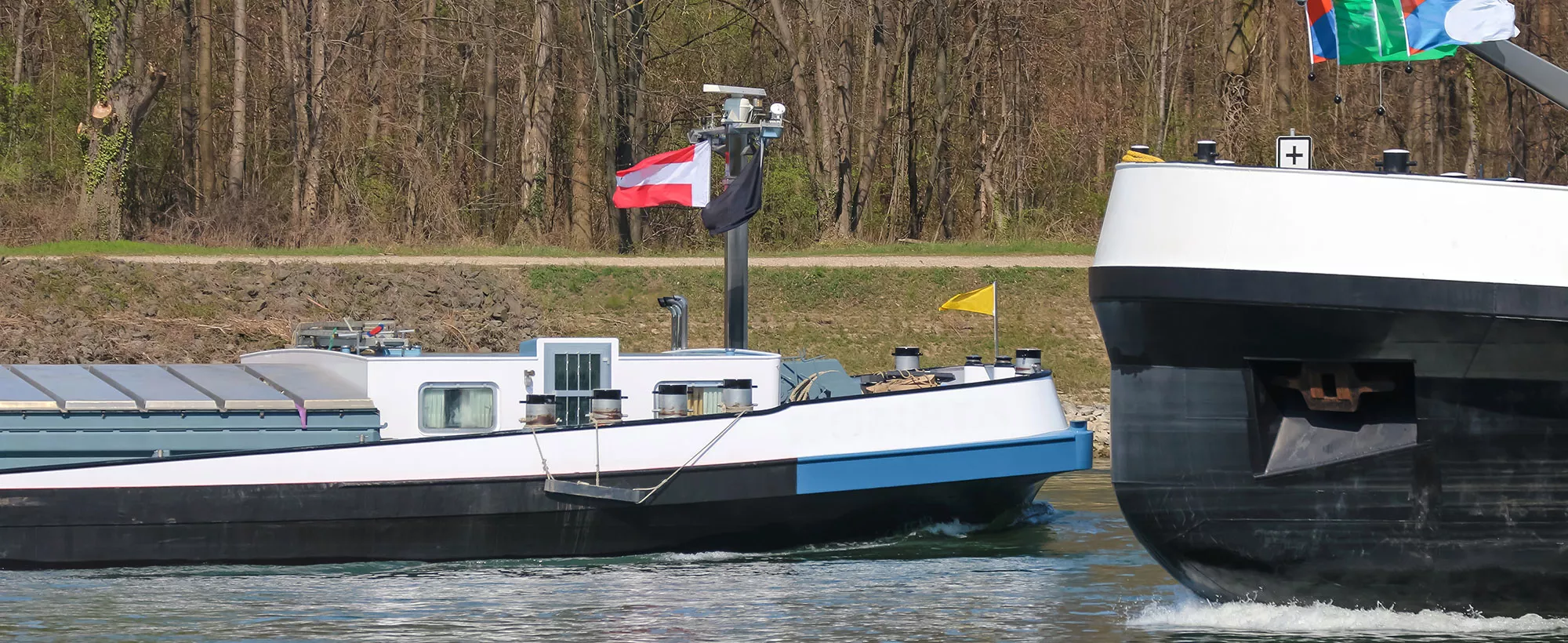
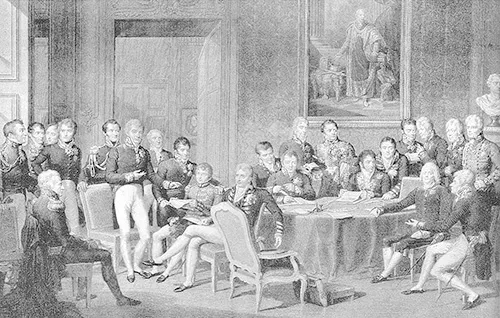
As an international activity, inland navigation requires a harmonised and appropriate legal framework. The Central Commission for Navigation on the Rhine (CCNR) guarantees the unity of the legal regime governing navigation on the Rhine. This involves not only adopting common rules, but also ensuring that that these rules are interpreted and applied in a similar way in all Member States.
To this end, the States that are party to the Revised Convention for Rhine Navigation 

 (or Mannheim Act) have provided an official interpretation of this Convention for the CCNR. In 2003, the Central Commission adopted a resolution relating to the principles of interpretation of the Mannheim Act .
The Central Commission can modify the Mannheim Act through the adoption of Additional Protocols Adoption is subject to formal ratification by the Member States. Seven additional protocols have been adopted to date.
Lastly, an amicable settlement procedure for disputes relating to the application or implementation of Rhine regulations is provided for in Article 45 (a) of the Mannheim Act. This procedure enables any Member State, as well as any individual or legal entity or any public bodies with a legitimate interest, to file a complaint with the River Law Committee (DF) regarding the application or implementation of the regulations adopted by the CCNR. The procedure is detailed in the Regulation on the right to file complaints .
Harmonisation of inland navigation law
A clear legal framework requires ongoing harmonisation of the rules of private law applicable to inland navigation in Europe.
The CCNR was behind several international conventions involving inland navigation:
- Strasbourg Convention on the limitation of liability in inland navigation (CLNI)
- Budapest Convention on the Contract for the Carriage of Goods by Inland Waterway (CMNI)

- European Agreement concerning the International Carriage of Dangerous Goods by Inland Waterways (ADN Agreement)
- Convention on the collection, deposit and reception of waste generated during navigation on the Rhine and other inland waterways (CDNI)
- Agreement on social security for Rhine boatmen
- Regional Arrangement Concerning the Radiotelephone Service on Inland Waterways (RAINWAT)
The CCNR also collaborates actively with the UNECE on legal matters, in particular with regard to the conventions adopted within the framework of the UNECE.
Fair trading
The prosperity of Rhine navigation depends on having a legal framework that ensures fair trading.
Although it has no formal powers in this area, the CCNR has developed a legal monitoring and information function. The aim is to ensure a degree of transparency in the legal framework within which inland navigation operates. This activity relies on the willingness of Member States to provide and explain their national rules. It also requires cooperation with the European Union, which now regulates a large part of this area.
As part of this work, the CCNR checks for any gaps or misalignments in existing rules governing international inland navigation and makes suggestions.
Access to the Rhine market
For information about access to the Rhine market, see ‘Vessels belonging to the Rhine navigation’.
The Committee
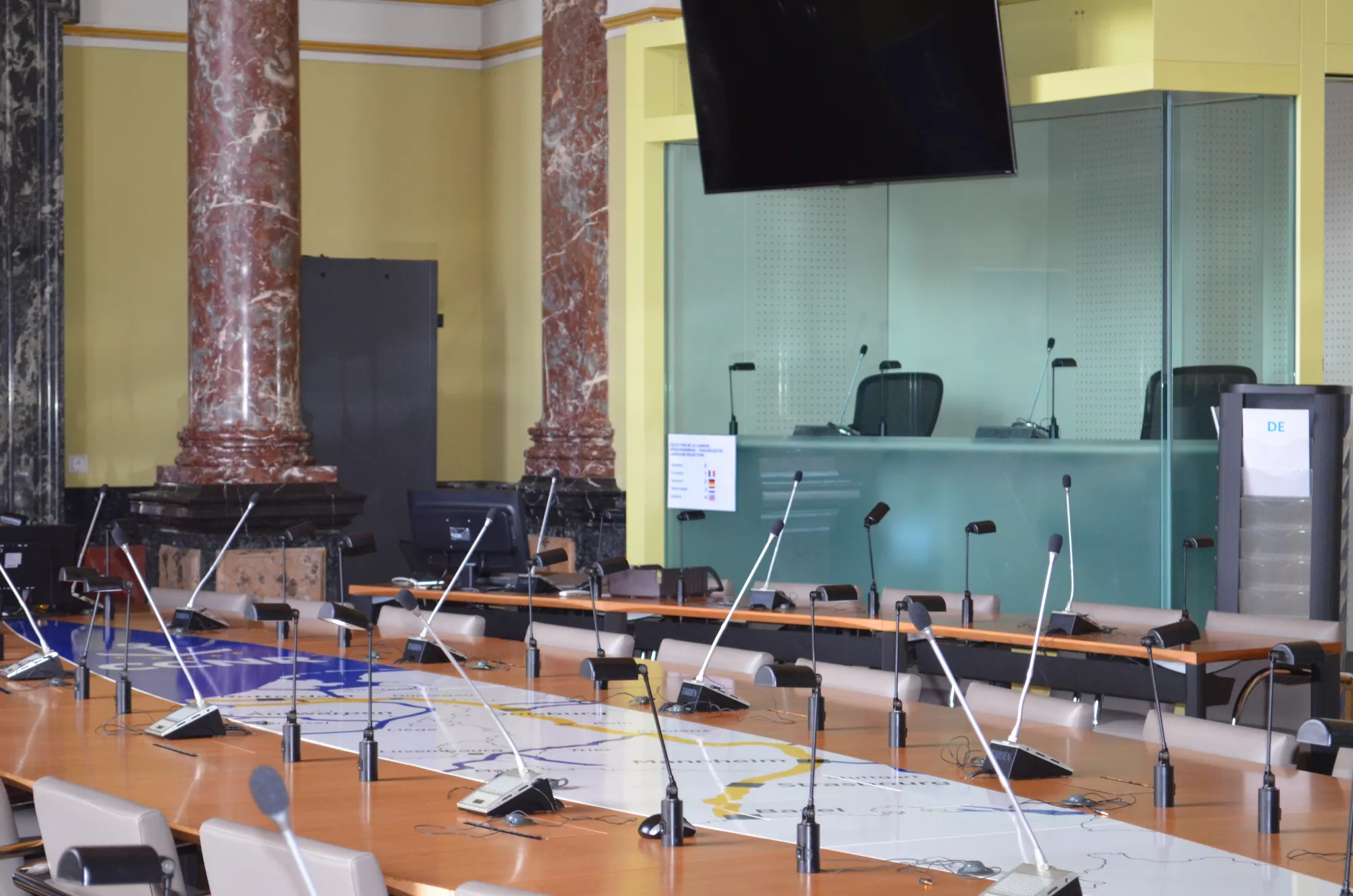
The CCNR has set up a Committee to deal specifically with river law issues: the River Law Committee (DF). This Committee is responsible for interpreting Rhine law. It also collects and compares river law in the Member States.
Every two years, the DF Committee defines a work programme setting out the priorities and future tasks.
The DF Committee traditionally meets twice a year, in Strasbourg (see the meeting calendar).
Chair of the Committee: Ms Muriel BOULDOUYRÉ, Commissioner for France
Secretariat: Ms Bente BRAAT, Legal advisor
Documentation
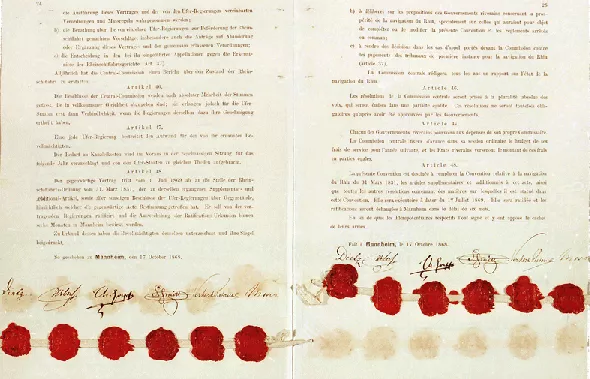
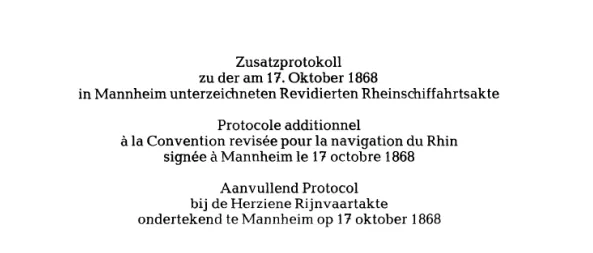
Additional Protocol No. 1 to the Revised Convention for Rhine Navigation
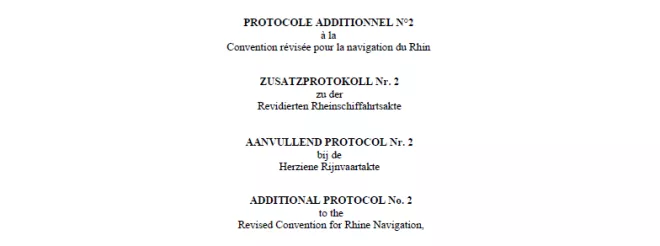
Additional Protocol No. 2 to the Revised Convention for Rhine Navigation

Additional Protocol No. 3 to the Revised Convention for Rhine Navigation

Additional Protocol No. 4 to the Revised Convention for Rhine Navigation
Additional Protocol No. 5 to the Revised Convention for Rhine Navigation
Additional Protocol No. 6 to the Revised Convention for Rhine Navigation
Common interpretation of Additional Protocol No. 6 to the Revised Convention for Rhine Navigation