

Aims of market observation
The aim of market observation is to provide regular information through annual and half-yearly publications. These help to identify cyclical and structural trends in European inland navigation.
The Central Commission for the Navigation of the Rhine (CCNR) also publishes thematic reports on subjects agreed in consultation with the European Commission.
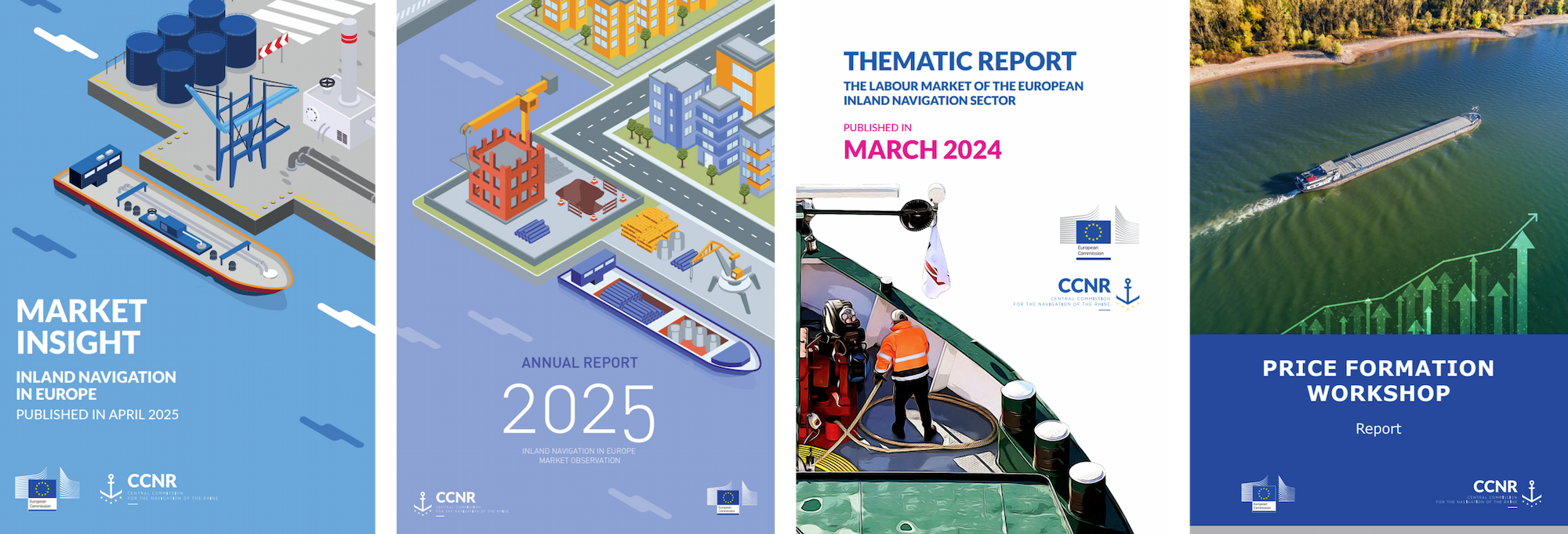
These analyses contribute to strategic decision-making in this sector in Europe, both at the level of the profession and companies, and at the level of transport policy and administrations. Thematic workshops are also organised as part of these activities, as and when required.
The observation tool used is based on indicators relating to the various aspects and elements that affect the inland navigation market. In the publications their trends are analysed and reviewed over a period of several years.
The main approaches employed include monitoring:
- the general and structural trends of supply and demand in the transport sector (carriage of goods and passengers);
- changes in the fleet (size, age, composition, new constructions, changes in capacity, innovation, etc.);
- market operating conditions (freight rates, operating costs, water levels, etc.);
- trends in the modal share of inland shipping on its various markets;
- trends related to the inland navigation labour market and the structure of the profession;
- IWT handling operations in inland and maritime ports;
- The future prospects of inland waterways transport;
- investments in inland waterways transport infrastructure.
The full annual, half-yearly and thematic reports produced by the CCNR can be downloaded as pdf documents at Documentation or consulted directly online at www.inland-navigation-market.org . The annual reports are available in 4 languages: English, French, German and Dutch. The other reports are only available in English.
Geographical area covered
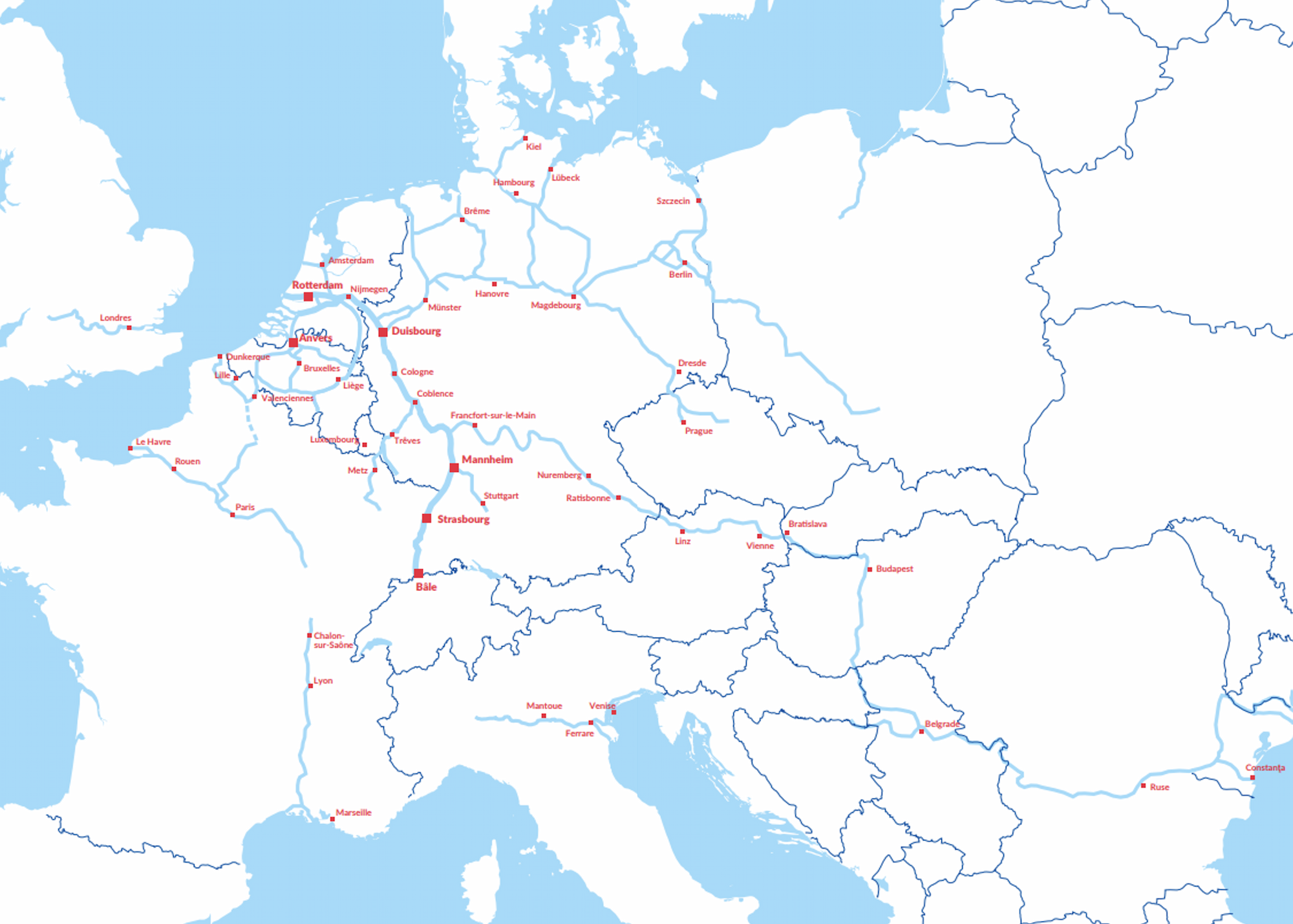
The market observation covers the entire network of navigable waterways across the European Union, plus Switzerland, the United Kingdom, the Republic of Moldova, Serbia and Ukraine, which are not part of the European Union. The various geographical markets are analysed, taking into account their specific characteristics.
Methodology
Transport demand is monitored on the basis of the volumes transported (in tonnes) and of the services provided (tonne-kilometre or TKM).
The analysis of the waterborne transport market is broken down into three sectors:
- dry cargo, including bulk transport and containers:
- steel making (ores and metallurgical products)
- energy (e.g. coal)
- construction (sand, gravel and construction materials)
- agriculture
- containers
- tankers:
- petroleum products
- chemical products and liquefied gases
- passenger vessels, comprising day trip vessels, ferries and cruise ships.
Transport supply is analysed on the basis of the capacity (tonnage) of potentially active fleets on the European network. "Potentially active" vessels are those that have the necessary navigation certificates and can thus provide an immediate response to a transport request.
The comparison of market supply and demand produces the freight rates. This is the most important index for a microeconomic appraisal of operations by the companies concerned.
By analysing trends in these three key areas, it is possible to make a broad assessment of the economic situation of inland navigation.
In addition to these main elements, external factors that influence the development of inland navigation are also taken into account, especially:
- navigation conditions and water levels, which play a major role in determining freight rates and the competitiveness of river transport. In recent years these factors have been the subject of more extensive and more detailed monitoring;
- the competitive position and modal split at sector and market segment level;
- the labour market and the availability of sufficient skilled labour;
- the infrastructure capacity (locks, ports, multimodal terminals at harbours etc.).
Secretariat: Mr Norbert KRIEDEL, Administrator responsible for market observation
Further reading



Documentation