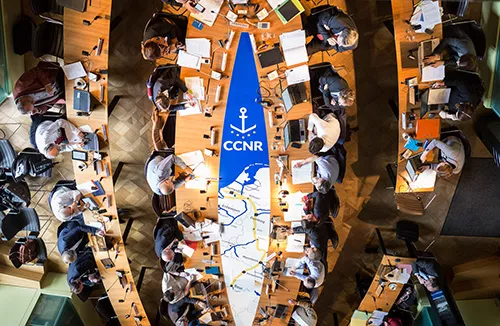
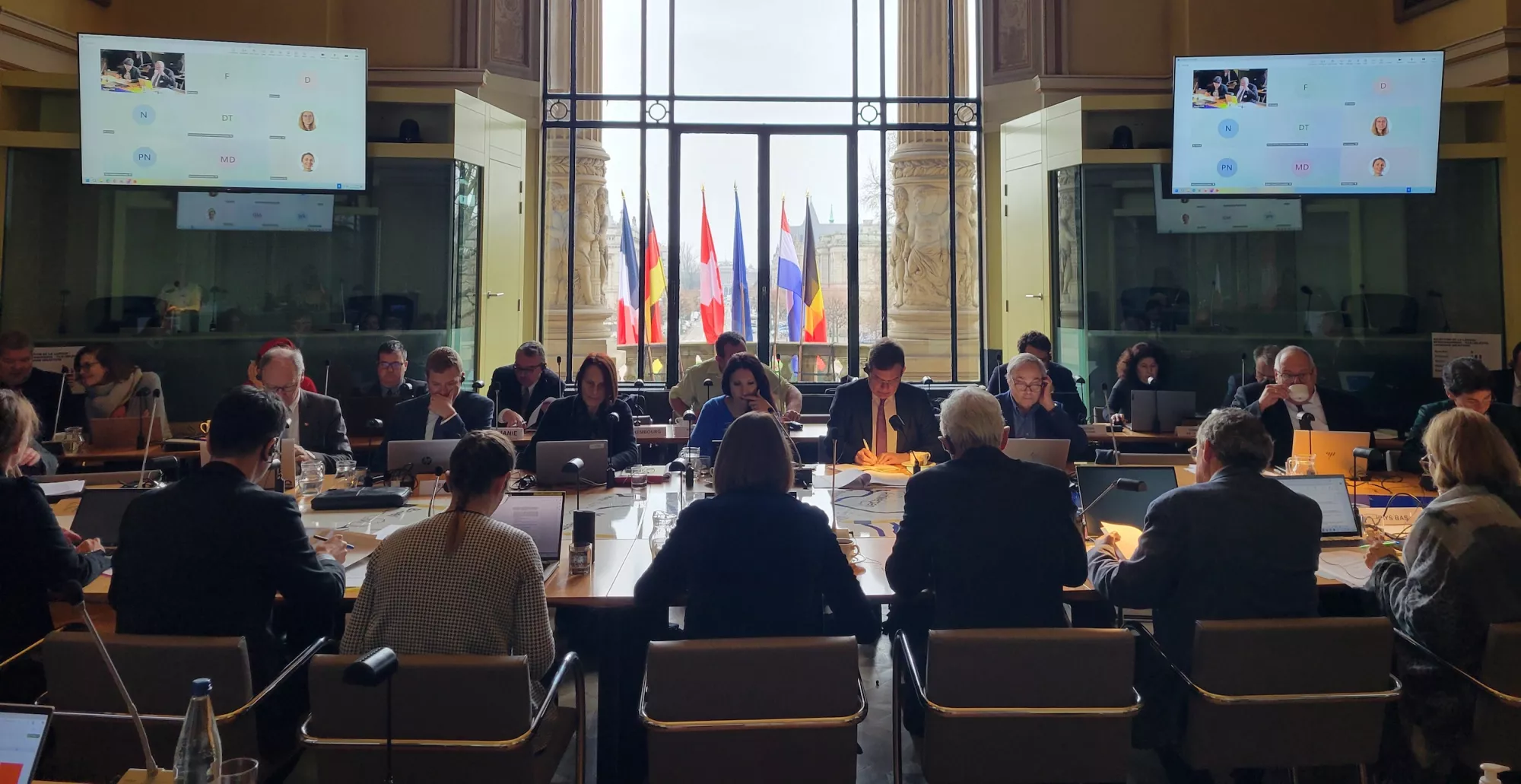
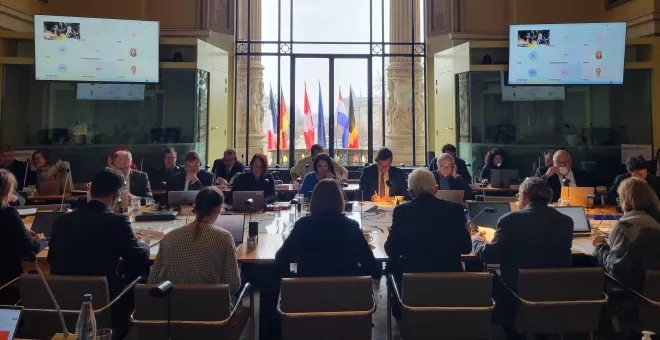
On 4 December 2025, the Central Commission for the Navigation of the Rhine (CCNR) held its autumn plenary session in Strasbourg. The meeting offered the opportunity to reflect on the highlights of the Dutch Presidency (2024-2025) and to look ahead to the priorities for the forthcoming Swiss Presidency (2026-2027). A number of resolutions were also adopted, relating to the economic situation of inland navigation, police and traffic regulations, remotely operated vessels, crews, matters concerning the Rhine waterway, the reduction of inland navigation emissions, and the 1952 Agreement.
Overview of the Dutch presidency of the CCNR
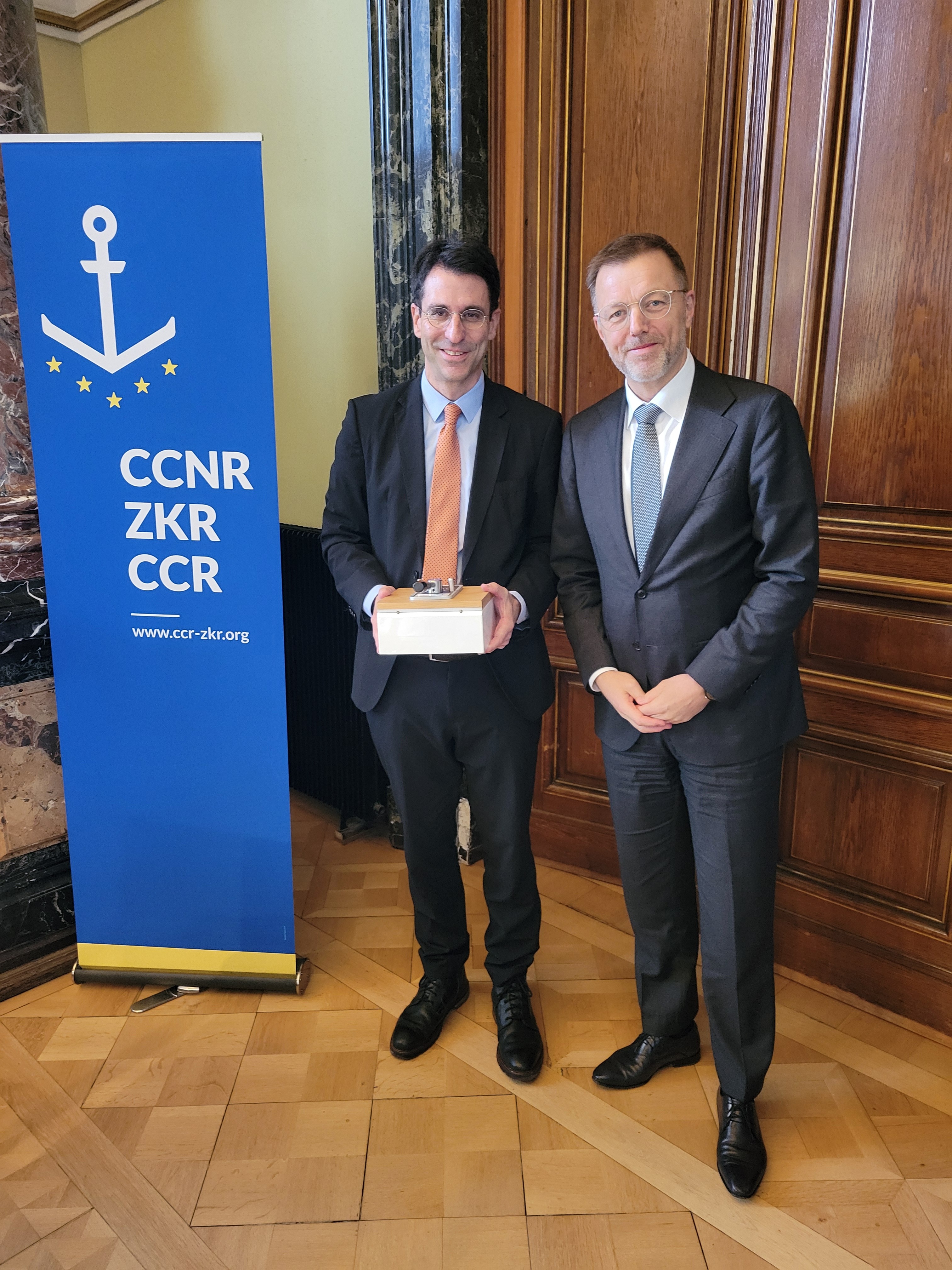
The change of rotating Presidency at the end of the year offered the ideal opportunity for Mr van Kruiningen, President of the CCNR and head of the Dutch delegation, to review the highlights of the period 2024- 2025. The excellent cooperation with the EU was particularly evident in the organisation of several strategic workshops covering cooperation with the European Commission. In the field of sustainability, work included the implementation of the CCNR roadmap and the development of standards relating to air pollution and greenhouse gases, with a view to creating an international label. The CCNR has also worked with the EU to promote funding opportunities for the inland waterway sector in the areas of sustainability and energy transition. With regard to the need to adapt to climate change, the development of a master plan for the Rhine has been proposed. The aim is to adopt an integrated approach – not limited solely to the issue of low water levels – while taking into account European regulations. In addition, the Dutch delegation has continued to work on automated navigation. To this end, a number of derogations have been granted for projects involving remotely operated vessels on the Rhine. Lastly, the CCNR has devised possible solutions allowing certain vessels to remain in service in spite of the expiry of long- term transitional provisions contained in the ES-TRIN. This concerns 24 areas where the transitional provisions will expire from 2035. These proposals will be examined by the CESNI in 2026.
Priorities for the Swiss presidency of the CCNR
The forthcoming Swiss Presidency presented its aims and priorities for the next two years. The environment, sustainability, digitalisation and security will form the key areas for the CCNR in 2026-2027. Particular attention will be given to continuing the work already underway to optimise the CCNR Secretariat and to strengthening cooperation with the European Union and the European River Commissions. A dedicated press release will be issued at the beginning of 2026.
The economic situation of inland navigation
Overall, there was a reduction in the volume of goods transported on the Rhine (-6%*). There was a decline in the transport of dry bulk goods (-8.4%), caused primarily by two market segments: sand, stones, gravel and construction materials, and iron ore. The transport of solid fuels (coal) was the only segment to experience an increase, unlike previous years. The transport of liquid bulk goods – chemical products and petroleum products – also declined (-8.5%). Lastly, the transport of containers showed a slight increase of +1.0%, indicating a stabilisation in this market segment. With regard to the price of fuels for inland navigation vessels, the decrease observed since 2022 continued during the first half of 2025. These prices are expected to continue to show a moderate decrease in the second half of 2025 and in 2026. Furthermore, freight rates rose significantly during the first half of 2025 due to low water levels. In the second half of 2025, freight rates are expected to decline due to low demand for transport and a return to normal water levels. Finally, for passenger transport, the first half of 2025 saw a continuation of the positive trend recorded since 2022. Compared with the first half of 2024, there was a +7.6% increase in the number of river cruise vessels passing the locks at Iffezheim. This growth is expected to continue in the second half of 2025 and in 2026.
* Comparison between the first half of 2024 and the first half of 2025.
Amendments to the RPR concerning TGAIN and side lights
The plenary session adopted a temporary provision in the Police regulations for the navigation of the Rhine (RPR) relating to Track Guidance Assistants for Inland Navigation (TGAIN). In brief, a TGAIN is an on-board navigation device that automatically steers the vessel along the course it is to follow. The aim of the amendments to the RPR is to regulate the use of TGAIN, taking account of the two serious incidents that occurred at the locks at Iffezheim (Rhine) and Müden (Moselle). To this end, they set out minimum requirements intended in particular to ensure safe passage through locks, pending the entry into force of the definitive rules, scheduled for 1 January 2028. This temporary provision represents a coordinated, international response and will apply from 1 June 2026 until 31 December 2027.
Another amendment to the RPR relates to adapting the rules on vessel markings, in particular side lights. Side lights should systematically be placed at the rear of certain vessels, in order to improve their visibility at night. The amendment adopted caters for specific factors related to pushers and tugs shorter than 35 m. Because of the technical difficulties encountered in attaching these lights, these vessels will no longer be obliged to place the side lights at the rear. The amendment will enter into force on 1 December 2026.
Six new recommendations for remote operation
In order to support the development of remote operation and to gather experience, the CCNR has adopted six recommendations for the following polit projects:
- the motor vessel ERNST KRAMER;
- the pushed convoy PRIVILEGE;
- the motor tanker VOLHARDING 1;
- the motor tanker VOLHARDING 3;
- the motor tanker VOLHARDING 17;
- the motor vessel BLUE MARLIN.
On the basis of the recommendations from the CCNR, national authorities will be able to derogate from the CCNR regulations for these six vessels. In practice, these pilot projects will mean that at certain times and on certain defined stretches of the Rhine, the vessels and the pushed convoy can be controlled remotely by an operator in a remote operation centre (ROC). For this, the projects require derogations from a number of provisions in the RPR and the Rhine vessel inspection regulations (RVIR), even though there will be a minimum crew on board and on duty. As this is a test phase, the boatmaster on board has ultimate responsibility and can intervene at any time. The installation of additional sensors on the vessels and the pushed convoy, the information available to the operator in the ROC and the minimum crew on board will ensure a safety level equivalent to ‘conventional’ navigation. The recommendations stipulate that regular evaluation reports must be provided to allow the CCNR to gather information and contribute to the work. These recommendations are a concrete example of support being provided by the CCNR to promote the innovation and development of automated navigation and remote operation.
Crew mobility
The CCNR has approved an amendment to the Regulations for Rhine navigation personnel (RPN) in order to allow the recognition in the future of certificates of qualification, service record books and logbooks issued by a third-party State and accepted as valid by the European Commission (EC). This forward-looking decision will allow the simultaneous recognition by the EC and the CCNR, thereby ensuring consistent legal frameworks. It will also facilitate the mobility of crew members wishing to work on the Rhine. The amendment will enter into force on 1 January 2026.
Matters concerning the Rhine waterway
The CCNR authorised the closure of a number of lock basins on the Upper Rhine for maintenance work. The CCNR also adopted a resolution by written procedure on 17 October 2025: this resolution concerns the installation of a dolphin to provide moorings for average and oversized vessels upstream of the lock at Germersheim.
Reduction of inland navigation emissions
The CCNR roadmap for reducing inland navigation emissions, adopted in 2021, sets out the transition pathways for the fleet and identifies a number of financial, regulatory and voluntary measures. Following on from the adoption and publication in June 2025 of the report on the progress made in implementing the roadmap, the CCNR launched the revision of the study on the “Economic and technical assessment of greening technologies contributing to the energy transition to zero-emission inland waterway transport”. Provided the necessary resources can be made available, this research project should provide the basis for a revision of the roadmap by 2030.
Request for interpretation of the 1952 agreement
The CCNR received a request for interpretation of the 1952 Agreement, relating to the customs and tax regime for diesel consumed as fuel by vessels using the Rhine, and the Revised Convention on the navigation of the Rhine. The 1952 Agreement, as interpreted in the light of the Revised Convention, aims to ensure equal treatment of river transport operators by prohibiting customs duties, taxes and any other regulatory measures that may favour navigation by a particular riparian State. It also exempts diesel from all taxation. The complaint received is based in particular on measures taken by the Netherlands, which allow Dutch fuel suppliers to market renewable fuels at favourable prices. As diesel was the only fuel available in 1952, the approach adopted by the CCNR has since evolved: the prohibition on measures taken by Member States affecting fuel prices, as provided for in the 1952 Agreement, should apply to renewable fuels in the same way as it does to diesel. However, the CCNR is of the opinion that the measures taken by the Netherlands do not contravene the aforementioned 1952 Agreement or the Convention as they relate to river transport operators and not fuel suppliers. Furthermore, the competitive position of inland waterway transport in other riparian countries is not compromised by these measures as river transport operators remain free to choose their place of supply and their fuel (diesel or other). In the interests of environmental protection, incentives promoting the development of renewable fuels should be supported.
Republic of Moldova granted observer status
During its autumn plenary session, the CCNR recognised the Republic of Moldova as an Observer State. The Republic of Moldova is a Member State of the Danube Commission and an official candidate for accession to the European Union. It has also had Observer status with the CESNI since 2023. The CCNR welcomes Moldovan participation in its activities. Moldova thus becomes the 12th CCNR Observer State.
Next plenary session
The next plenary session of the CCNR will be held in Strasbourg on 11 June 2026.
Adopted resolutions (2025-II)


The CCNR wishes you a very happy festive season!

Other news from the CCNR
Appointment of the new Secretary General of the CCNR
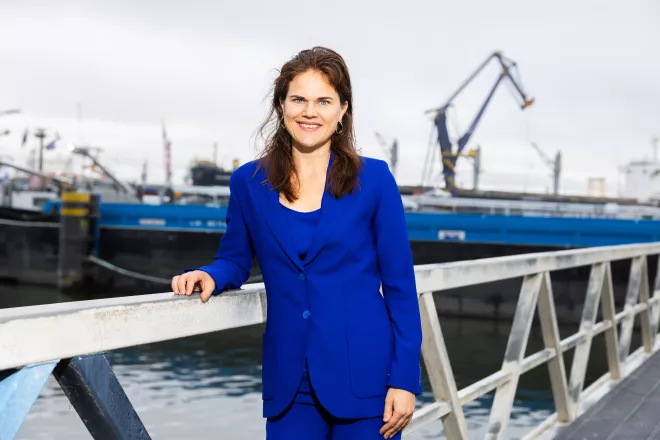
The delegations of the Central Commission for the Navigation of the Rhine (CCNR) have appointed Mrs Hester Duursema as the new Secretary General of the CCNR, with effect from 1st January 2026.
Read the press release
Annual report on inland navigation in Europe: 2025 Edition
Continuing its long and fruitful collaboration with the European Commission, the Central Commission for the Navigation of the Rhine (CCNR) is delighted to present its 2025 Market Observation annual report.
Read the press release
Plenary session spring 2025
On 5 June 2025, the Central Commission for the Navigation of the Rhine (CCNR) held its spring plenary session in Strasbourg.
Read the press release